When I met Mme Solange Claustres, she asked me whether I had ever met Michel Conge. I had not. “He was very good,” she said. In the context of our […]
Read more
When I met Mme Solange Claustres, she asked me whether I had ever met Michel Conge. I had not. “He was very good,” she said. In the context of our […]
Read more
Now available on Amazon, as a paperback, is Mrs Adie’s book, “Helen Adie: That Higher Part Gives Me Strength.”The book launch shall be at 7:00pm 24 July 2026, at the […]
Read more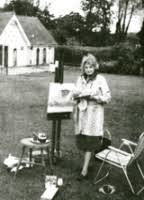
Beryl Pogson, Nicoll’s long-time secretary, made some significant statements about Gurdjieff, which I would think can only have come from Nicoll (excepting the last one). I think that these passages […]
Read more
149. I suspect that this is from Gurdjieff: “You must remember here a phrase once used in the Work—”No effort—no work: no work—no awakening: no awakening—death.”” (1643-4, 8 November 1952, […]
Read more
134. “Identifying” said G., “is the greatest enemy that we have to overcome. It is through being always identified that we are kept asleep and therefore have to live in […]
Read more
121. “When I was at the Institute in France I used to be told at about six o’clock in the morning when I was on a certain job that I […]
Read more
In the Maurice Nicoll Papers, Yale University Library, MS 1348, series 1, Box 3, folder 13 are 188 pages of his science study (at least several pages are missing, and […]
Read more
Number 120, at the end, is of the greatest practical value. All of these are worthwhile, but that one is significant on several levels. 113. “Gurdjieff, when once asked if […]
Read more
97. “He cannot see that he is a machine and that everything he does the machine is doing and that he ascribes to himself a thousand and one things that […]
Read more
90. This ties in with #89, and like that, is only possibly from Gurdjieff: “The Work says: “Try to observe your songs”. That is all it says.” (1107, 10 January […]
Read more