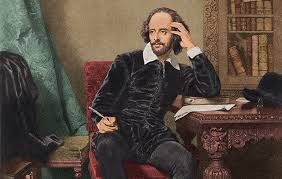
In the East my Pleasure Lies: A Fourth Way Interpretation of Shakespeare’s Plays, Beryl Pogson, Eureka Editions, Utrecht, 1999
Beryl Pogson (1895-1967), a pupil of Maurice Nicoll who, after his death in 1953, led the continuing Nicoll groups until her death, produced two modest-sized books offering what she calls a “Fourth Way interpretation” of Shakespeare’s work; although in this and the other volume, The Royalty of Nature: A Commentary on Shakespeare’s History Plays, she does not devote a chapter to each and every one of the plays.
In this post I shall simply set out, and briefly comment on the first chapter. The volume opens with an acknowledgement:
The psychological ideas incorporated in the following interpretations are derived from the System of Psychology taught by Maurice Nicoll – the Fourth Way.
The Prologue opens with a quotation from Rabbi Moses Maimonides to the effect that when one finds in religious books of Judaism a tale which seems impossible, and contrary to reason or common sense, then it must be that the story included an “allegory veiling a deeply mysterious truth,” and further, the more outlandish, the deeper the spiritual wisdom. (1) Pogson declares that she will offer her interpretations on the basis that this is applicable also to some of Shakespeare’s plays. She does not say that this is so for all his plays, but does assert that the story outline (“framework”) is carefully chosen as the atmosphere in which the characters live, and the events of the narrative occur. According to Pogson, in Shakespeare’s plays, as in fairy tales and mythology, “in the thread of a plot lies the clue to the inner meaning of the characters.” (1)
Pogson then relates to Shakespeare to the Ancient Mysteries, and the Greek dramatists, as holding up a mirror to Man of the truth about Man and Nature. (1-2) She does not say that Shakespeare was personally a member of some sort of school, or had been initiated into Mysteries, but implies a continuity of interest and even of content. Hence, she wrote:
In depicting Man’s true nature, the author shews to what depths he has fallen, so that to him “this goodly frame the earth seems a sterile promontory and the air a foul and pestilent congregation of vapours”[1] and in the plays a Way of Return is indicated for Man towards his true destiny, which is the attainment of his Spiritual Being. (2)
This then, is Pogson’s thesis: we can find the above doctrine in Shakespeare. Together with that ultimate goal, Man must wake up to the fact that he is in a fallen state. He does not even know he is lost, but rather is blinded by various illusions which, she wrote, Shakespeare addressed in various plays: thus the “illusions” of war is the subject of Troilus and Cressida, of romantic love in A Midsummer Night’s Dream, of self-love in Timon of Athens and King Lear, of self-righteousness in Measure for Measure, and of ambition in Macbeth. Alongside this, on her interpretation. Othello is emotionally lost, and Hamlet is intellectually lost. (2)
But, she adds, Shakespeare knew of a way out, and in this, he stood in the tradition of the Mysteries (whether he knew of the Mysteries or not is another matter). Most of the central characters in the plays are from the nobility: this, she asserts, is the Mystery tradition, because noble birth “represents (Man’s) innate Divinity as a child of God.” (3) This is part of the reason why when Shakespeare introduces one of these characters the original impression is that he is admirable, something which she relates to how the Knights of the Round Table had to be of the highest character before he set out on his quest. As she puts it so well: “The knights had to be able to hold their own in the outer world, before they set forth on their journey of inner development.” (3)
A difference between Shakespeare and the Arthurian legends is that in the former the giants and dragons of the latter are replaced by events in the outer life, events which can understood as reflecting the inner life.
This, she says, explains why the plots are so often criticised: they “represent the psychological world in which the characters live and move and have their being …” (4)
Pogson then comes to one of her more striking theories, that the male and female figures in Shakespeare fall to properly be interpreted as inner aspects of one person – whether male or female. To my surprise, but nonetheless to my delight, she here quotes the Zohar (sic):
Every figure which does not comprise male and female elements is not a true and proper figure … The male is not even called male until he is united with the female. (4)
As an aside, if one applies this to a fairy story like Snow White, it becomes apparent that to interpret it in terms of gender politics is to bleach it of its highest and best meaning. Pogson continues, stating that the “ideal woman” is the symbol of the “spiritual Soul in Man,” whether male or female; and when the hero seeks her he is thereby seeking “self-completion.” (4-5) [I do not mention here the patent Christian allegory in this fairy story.]
Pogson makes some remarkably insightful comments about the heroine, not least that: “They are all motherless. It is often from the Father that they derive their special gifts.” (6) I had noticed that that was a sort of trend, but I had never articulated it. The heroes are brave, but they lack the intuition (I might say “wisdom”) of the female characters. (7) This has the corollary that:
The power of right action, springing from intuitive apprehension of the Truth, can be gained only by unity with the spiritual Self. (7)
She points out that where there is no ideal woman, the hero has no ideal to aspire to. (9) I say “points out” because I think she may well be right, or rather, it seems to be as she says.
Pogson takes delight in declaring her intention to upset established criticisms of some of Shakespeare’s plays, especially Cymbeline, Measure for Measure, and Antony and Cleopatra. (11) She closes with a flourish:
… the aim of Gothic architecture, like the aim of Shakespeare’s plays, was to indicate the Way to Heaven and to bring down Fire from Heaven to Earth. (12)
[1] Hamlet II.ii