Why do most commentators undervalue Sir Walter Scott’s short novel, A Legend of the Wars of Montrose (1819)? I wonder if it is not because of the Catholic sympathy he […]
Read more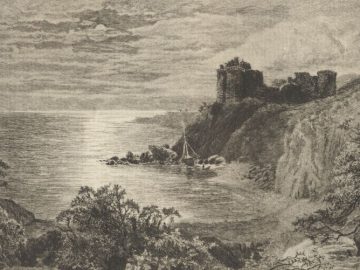
Why do most commentators undervalue Sir Walter Scott’s short novel, A Legend of the Wars of Montrose (1819)? I wonder if it is not because of the Catholic sympathy he […]
Read more
We cannot afford not to see and understand our own attitudes: they are absolutely critical in our lives. As Ouspensky said: “Our attitudes are like wires which connect us with […]
Read more
Having said something about the purpose and possibilities of literature, and introduced Walter Scott’s 1816 novel The Black Dwarf, I shall now discuss its contents. 3. The Issues As stated, […]
Read more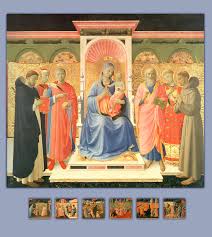
The Season of Christmas is precious, and it grows more precious for us, as each year imperceptibly but surely ages us. We sense that our time on earth is limited, […]
Read more
Part One: Where We Stop How is it possible that we can work at Gurdjieff’s methods and study his ideas for decades, and yet make little advance beyond a certain […]
Read more
This piece was first published around seven years ago. I have made some minor improvements. I am shortly to follow it up with one entitled “Where We Stop”, which shall, […]
Read more
The late Dr John Lester (1919-1999) was a pupil of Gurdjieff and of Jane Heap; in fact, he was one of those closest to Jane. I am proud to say […]
Read more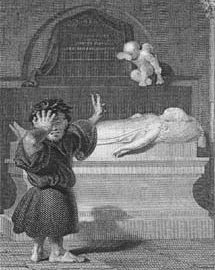
“… fair play and auld (old) Scotland for ever!” The Black Dwarf, chap. 12 The issue at the heart of The Black Dwarf is that of suffering in that word’s […]
Read more
The Text Having looked at Ode 1 of the Odes of Solomon, we now come to Ode 3, for Ode 2 is missing. It is not possible to know how […]
Read more