134. “Identifying” said G., “is the greatest enemy that we have to overcome. It is through being always identified that we are kept asleep and therefore have to live in a world where nothing can ever go in the right way as regards the interests of Man.” (1444, 27 January 1951, 422nd commentary) Perhaps this is from the unpublished version of In Search of the Miraculous on which Nicoll worked.
135. “Amongst other things the Work teaches that we must struggle against imagination. Imagination is a tremendously powerful force. Moreover it is capable of satisfying every centre. G. said its function was to keep humanity from awakening. If one part of the Solar World develops too quickly, it has to be delayed. If the development of that Being represented in time and space as the Earth is outpaced by the development of Man on Earth, something must be done. G. put it in his own way. He said: “So the Powers called in the chief engineer and told him what was taking place. They asked him if he could suggest a remedy. The chief engineer, after reflecting, said he could arrange everything. So he invented imagination and gave it to Man and from then on, instead of awakening more and more, Man fell more and more asleep.” (1447, 9 February 1951, 424th commentary) This seems rather obviously based on Beelzebub, but neither is it identical. Who knows what sources Nicoll had?
136. “A man who is Hasnamous (which is a word invented by Mr G. based on some Persian or Turkish language) is a man who is clever enough to see that he can gain power by means of tricks over ordinary people. … At the time when G. was there he (Ouspensky) pointed out some dictators who were really Hasnamous people. On the other hand, he said that they have always existed – that is, people whose well-being depends on the ill-being of other people.” (1457, 17 March 1951, 429th commentary)
137. “At the Institute in France we had an exercise given us. In looking, say, at a matchbox, we had to think of its origin, and the cause of its origin to begin with. But I forget the steps now.” (1485, 18 August 1951, 443rd commentary)
from volume 5:
138. “… on one occasion when G. was asked a question about a man’s psychology, he replied: “A man such as you are speaking of has no psychology. He is a machine. In order to study a machine, you do not speak of psychology. With him it is a question of mechanics and
nothing more. Study him as a machine and you then will know exactly how he will behave in different circumstances.” That is what G. said, in so many words. It shews one the reason why he so often said: “Which kind of man?” when people spoke of anyone. (1531, Christmas 1951, 461st commentary)
139. Perhaps from Gurdjieff: “So we do not see our real situation; we do not appreciate its
dangers; we do not see we are living in what the Work calls the Hall of Mirrors and are going in no direction whatever and are going nowhere. The mirrors are so arranged that it seems as though one were going straight ahead. Actually one is going nowhere; one is just going round and round.” (1538-1539, 12 January 1952, 463rd commentary)
140. “Early in the Work I was told by Mr Gurdjieff to put aside all my books and read no more. Now I had already studied at different times in the past the Gnostic literature, the Neo-Platonists, the Alchemists, some of the Indian Scriptures, the Hermetic writers, the Sufi literature, the Bible, the Chinese Mystics, the writings of Eckhart, Boehme, Blake, Swedenborg and others, and had been a pupil of Jung for some years. I say all this on purpose to shew you how surprised I was to learn I had to put these studies aside. But it did not mean that my studies had been useless. It meant that now, having met the Work itself, they were no longer useful. They had played their part in forming Magnetic Centre. But they now enabled me to see how strong and clear and connected the Work was by comparison. What I had to do now was to study the ideas and the methods of the Work. Anything useful gained from the past would then fall into its place.” (1539, 12 January 1952, 463rd commentary)
141. “G. said: “You always think, think, think. I look.” (1540, 18 January 1952, 464th commentary)
142. “Mr O. told some of us that, when asked about Recurrence, G. had replied: “It is something like this: the executed becomes the executioner; the executioner becomes the executed.” In short, the situation is reversed. Passive becomes active and active becomes passive. The situation is turned the other way round.” (1565, 3 April 1952, 475th commentary)
143. I had thought that this terminology had come from Gurdjieff: “We must recall here that the Table of Hydrogens is a Table of Uses.” (1583, 24 May 1952, 482nd commentary) However, see Mr Adams’ note – it comes from Swedenborg.
144. “The dog at the Institute in France was called “Kak vass!” like you.” (1599, 12 July 1952, 488th commentary)
145. “Let me remind you finally that G. said we must move our brains every day, apart from other things. He also said that this Work is to make us think in a new way—both about ourselves and life on this planet.” (1602, 19 July 1952, 489th commentary)
146. “He [St Paul] is referring especially to the end of the age in which we are now living, “when every thing is cracking—little by little”, as G. said. (1619, 30 August 1952, 495th commentary)
147. “When G. told someone years ago that his chief feature was Peacock, the person was incredulous. He could not see what was meant, and I believe never did.” (1621, 30 August 1952, 495th commentary)
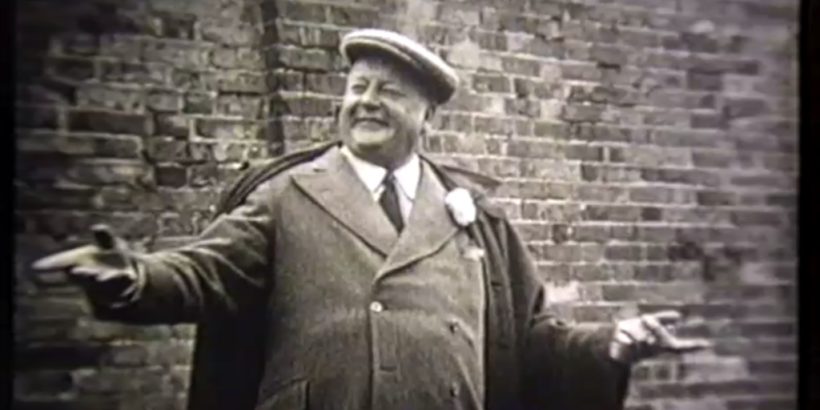
148. “There is all the difference in the world between knowing and understanding. After “Tertium Organum” was published, G. said to O.: “If you understood all you have written in your book, I would take off my hat to you.”” (1629, 4 October 1952, 498th commentary) This statement about taking off his hat is not found in In Search of the Miraculous, 20.
Joseph,
143’s reference to a “Table of Uses” almost certainly refers to Swedenborg’s teachings. His Latin usus was translated as “use” in Nicoll’s day (and more recently as “service”). Swedenborg makes use the central organizing principle of creation, not a peripheral concept, but the very purpose of both heaven and human life.
A student of N’s notes:
“Swedenborg’s Doctrine of Uses was being studied by some of the group at this time. ‘I don’t seem to have a use, a place in the Work,’ said someone. ‘I have no specific task.’ ‘No special task! Why don’t you remember yourself now!’ was the answer.”
— Pettavel, Diana. A Few Recollections of Dr Nicoll and of Amwell 1949–1953. Eureka Editions, 1999, 21.
The book she is referring to is The Doctrine of Uses (Swedenborg Society, 1901).
A recent scholarly treatment of the topic is Swedenborg’s Principles of Usefulness by John S. Haller Jr. (Swedenborg Studies 23, Swedenborg Foundation, 2020).
Under the category Use / Uses / Usefulness in volume IV of my index on Nicoll’s use of Swedenborg in the Commentaries, I have 1582–83, 1670–71, 1673, 1680–82, 1714–15. Jeffrey Michael Adams, ed. Indices of Maurice Nicoll’s Psychological Commentaries on the Teaching of Gurdjieff and Ouspensky, vol. 4, References and Allusions to the Heavenly Doctrines of Emanuel Swedenborg. Privately published, 2008.
PDF available for free at https://psr.academia.edu/JeffreyAdams
Thoroughly enjoying your analysis of the Commentaries!
Best,
Jeffrey
Thank you. That makes sense. I have amended 143 to refer to this note, and to say that it shows the influence of S. not G.