The Pocket Oxford Dictionary tells us that to relax is to “cause or allow to become loose or slack or limp … grow less tense or rigid or stern or ceremonious or energetic or zealous” while the word “relaxation” has the developed meanings of “recreation, amusement.” That seems to me to be a good starting point.
But in Gurdjieff’s system, I think a better definition to use as our point of departure might be “stopping unnecessary muscular exertion and the attendant waste of energy.” Now muscular exertion can be quite subtle. Often one is not consciously aware that one is making it. For example, if one senses the eyes and the region around them, the eyelids and eyeballs, the eyebrows; one often senses a certain tension there. That is the result of unnecessary muscular exertion. It may also be related to emotional disturbance, or bad posture of body,
I recently posted what I consider to be some valuable material on relaxation from Mr Adie, and many of my posts mention it. https://www.josephazize.com/2026/02/16/one-i-meditates-thats-not-good-14-june-1983/
I will quote some of it here: “Later in that same response, he mentions how important relaxation is in helping us remain balanced. Once more, when I heard that, I realised that this was an aspect of relaxation which I had overlooked. Just as a tent which is supported by ties with different degrees of tenseness, will not be balanced, so too, if parts of me are subject to varying degrees of tension, it must be impossible to retain balance. That is one function of “relaxing” in the contemplative exercises, although there are issues with that word – it often conjures up the wrong associations: massages, alcohol, slippers and late mornings.”
“Another function of making tensions passive is to free more energy, and to make it possible for energy to move more smoothly and evenly throughout the body. If there is a strong tension between my eyebrows, for example, this attracts my energy there and means that there is less consciousness of the other parts of my forehead and face. In other words, tension makes it harder to have a sense of the whole of myself.”
“There is an interesting matter: the Adies did not always begin with relaxing each part of the body, and then, when that was completed, sensing each part of the body. Sometimes they would just go through body once. sensing and relaxing at the same time. Now, sometimes the notes of Mr Gurdjieff exercises show him doing the same thing, and sometimes he makes no reference to relaxing the body all. Why?”
“I cannot speak for either Mr Gurdjieff or the Adies, but I suspect that different approaches are necessary at different times. But as a general rule, in order to relax a part of your body I do need to sense it. So by relaxing it, I am in fact sensing it and relaxing it together. But the role of sensation in relaxing the body may even be highlighted by the practice of sensing and relaxing at the same time, and going through the body just once. Then, on another occasion, I begin with the emphasis on relaxing (perhaps commencing with face and head) and then return to the body with the emphasis on sensing (beginning the with the feet, because of the help from sensing the feet on the ground).”
“The sort of relaxing we want, which Mr Gurdjieff sometimes referred to as “decontraction,” is not just a feeling of softness, although it has that. There is also a feeling quality of gentleness. And there is a sense of light, as Mr Adie said in the passage quoted above. I mean by this that one senses certain lightness and life in that part of the body; and it is a quality of energy which unites the various parts of the body when it is brought into them. This “relaxing” serves as a linking, a relationship-making. It also – as the full body is relaxed – alters the tempo of the breathing and the blood circulation (invariably making them slower and more even), so that through the more deliberate tempo of those functions, my being-state changes for the better. Smaller and sillier I’s are not possible with such a deep and measured tempo prevailing in my body. One only has to remember the connection between hurry and forgetfulness, error and lack of consideration.”
“Also, as Mr Adie said, a better quality of thought is available when I am not tense. In fact, he said, one cannot think when one is tense; and there is a great truth in that – although one can have access to the results of past thought, I might add.”
Relaxing is a mystery, or at least, the sort of relaxing we seek is. I shall add notes to this post as more aspects of relaxing come to mind, because it is good to have all our thoughts on a critical topic in one place. I had thought to add them to that post, but I have changed my mind.
Note 1
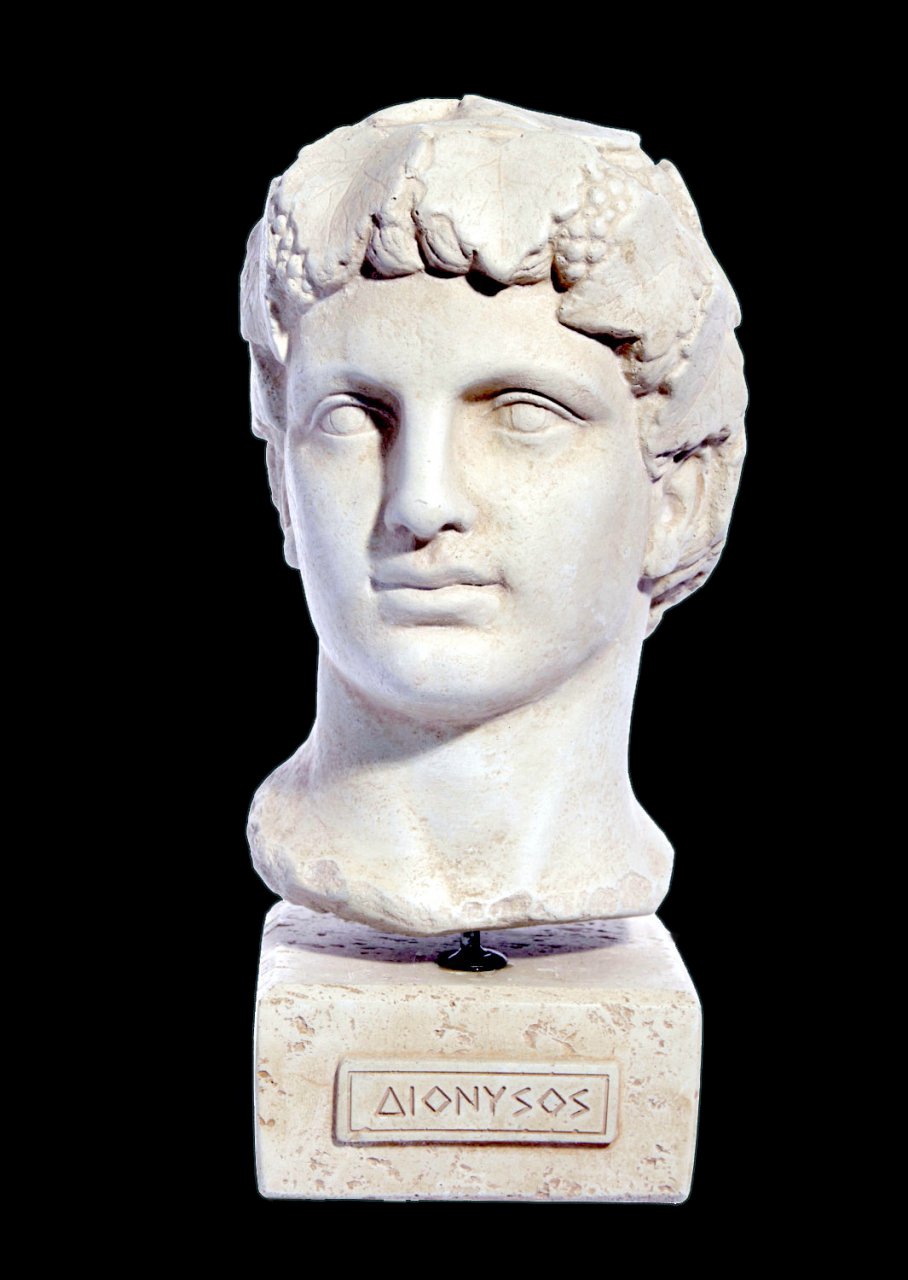
18 February 2026: consider this bust of the god Dionysos. It is free of tension, yet his face is subtly expressive. It is in movement, yet it is relaxed. This is the chief reason I use a lot of ancient art, especially from Greece: it shows people in more or less relatable circumstances and postures, and yet, they are relaxed as if from inside.
Note 2
We are not always aware of the waste of energy, but we do feel its effects.
Note 3
Tension can manifest in contrary ways. A person shaking all over can be tense, as can a person paralysed by fear. But in each case there is excessive muscular exertion, and terrific waste of energy.
Note 4
It is possible to train the bodily responses so that, at a direction, the moving-instinctive centre takes over the relaxing. The head gives a direction or a request, and allows the body to respond.
Note 5
It can help to know and to feel a need to relax. That may help the moving-instinctive centre to perform its work.