The Pocket Oxford Dictionary tells us that to relax is to “cause or allow to become loose or slack or limp … grow less tense or rigid or stern or ceremonious or […]
Read more
The Pocket Oxford Dictionary tells us that to relax is to “cause or allow to become loose or slack or limp … grow less tense or rigid or stern or ceremonious or […]
Read more
At a group meeting on Tuesday 14 June 1983, there was what I count as a most remarkable comment by Mr Adie in response to what seemed to me to […]
Read more
Nicoll does not directly attribute this to Gurdjieff, but I am fairly sure it is from either Gurdjieff or Ouspensky: “… the Work says that understanding is the strongest force […]
Read more
Part One First, this is from vol. 3 of Maurice Nicoll’s Psychological Commentaries: “Now in ordinary seen life, where people, even religious people, do not practically work on themselves each […]
Read more
volume 3 of the Psychological Commentaries G. once said: “You are all different kinds of machines—some are typewriters, some are sewing-machines, some are mincing-machines, and so on.” (780, 22 September […]
Read moreThis year, 2026, there were some special elements associated with our commemorative meal for the 13th. Together with the impact of the evening and all which led up to it, […]
Read more
44. “On one occasion Mr. G. said, in so many words, in speaking of the First Conscious Shock: “Man should remember himself and he was born to do so. If […]
Read more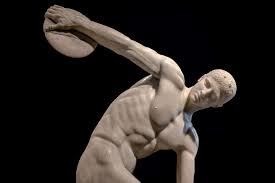
38. It is extraordinary how many variations there are in Nicoll’s recollection of this one short saying. “On one occasion G., speaking of Self-Remembering, said: “Which self do you wish […]
Read more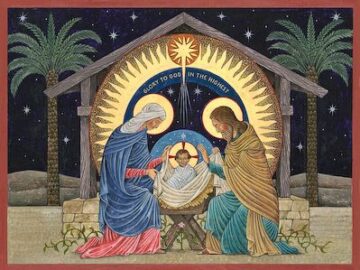
The Incarnation of Christ can be a powerful reminder of this critical question: is my head with my body? That is only the start of our questioning, but, my word, […]
Read more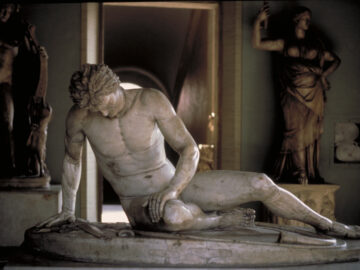
“G. once said that “symbolism should act as a shock to our knowledge,” and spoke of four kinds – Hebrew, Egyptian, Persian, and Hindu.” (475, 15 July 1944, 116th commentary) […]
Read more