This piece was first published around seven years ago. I have made some minor improvements. I am shortly to follow it up with one entitled “Where We Stop”, which shall, […]
Read more
This piece was first published around seven years ago. I have made some minor improvements. I am shortly to follow it up with one entitled “Where We Stop”, which shall, […]
Read more
The late Dr John Lester (1919-1999) was a pupil of Gurdjieff and of Jane Heap; in fact, he was one of those closest to Jane. I am proud to say […]
Read more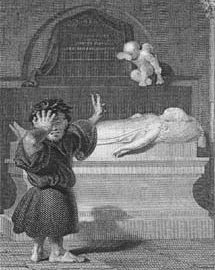
“… fair play and auld (old) Scotland for ever!” The Black Dwarf, chap. 12 The issue at the heart of The Black Dwarf is that of suffering in that word’s […]
Read more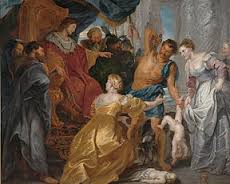
The Text Having looked at Ode 1 of the Odes of Solomon, we now come to Ode 3, for Ode 2 is missing. It is not possible to know how […]
Read more“The Troubled Spirit of Tintern Abbey” is an interesting story from Lord Halifax’s Ghost Book (1936, pp. 201-204), chiefly because it relates to Purgatory and the effectiveness of Masses for […]
Read more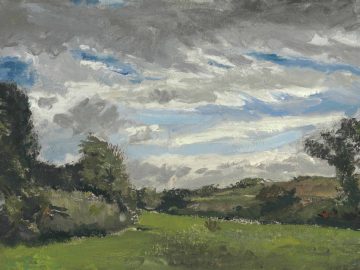
The exchanges of Saturday 8 March 1985 were remarkable. They could all be published. I suppose it goes to show that “like seeks like”, and that “deep calls to deep”, […]
Read more
These two questions and answers come from the lunch exchange of Saturday 8 March 1985. I have already posted Mr Adie’s address for the day, and the first question and […]
Read more
This is from a Saturday Weekend Work of 8 March 1985. It assumes a knowledge of some of Gurdjieff’s simpler terminology, such as “moving centre”. I set out below Mr […]
Read moreSublime, poignant, elegiac: that is “I Should Have Sent Roses” from The Union, by Elton John and Leon Russell. In Gurdjieff-influenced terms, I would say that the person who wrote […]
Read more
The Odes of Solomon are the oldest surviving hymnal from the early Christian world. They were probably written in ancient Syria, in the Syriac language, between 100 and 200 AD. […]
Read more